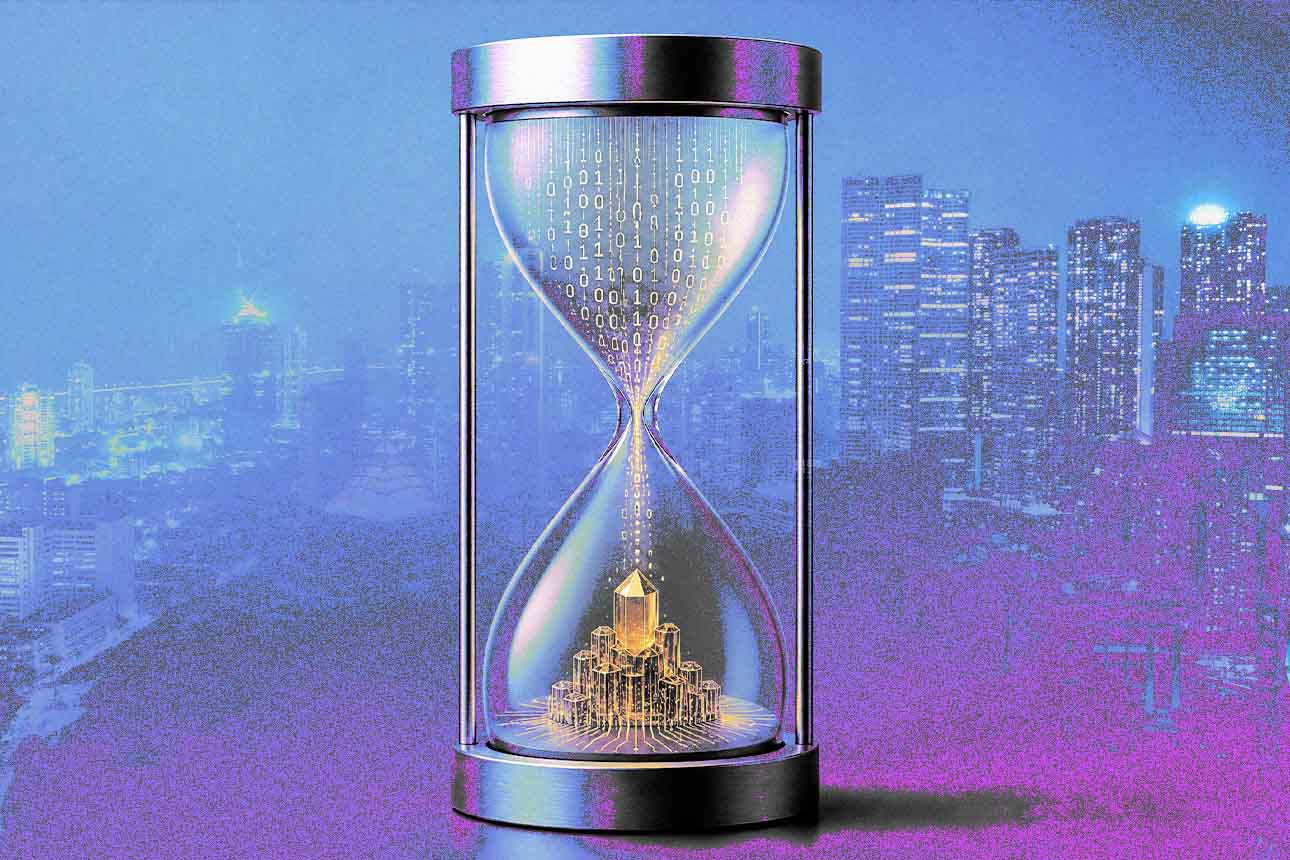
India’s Capital Rewards Speed. Invention Demands Patience

India’s startup engine has never been short of money or talent. The resource it still rations is patience, the capital willing to wait out the decade that real invention takes.

Topics

  • Key Takeaways

    01

    India’s founders long blamed a capital shortage. The country is now the world’s third-largest startup base, with more than 200,000 recognized ventures and about $10 billion in annual venture funding.

    02

    The constraint changed shape rather than vanished. Seed money for fast, familiar models is plentiful, while growth capital for invention stays thin, and even deep-tech investors place the gap at Series A and beyond.

    03

    Whether India owns or rents the next technology stack turns on who funds that patience. On 13 May 2026 the state moved first, releasing the opening cheques of a new deep-tech fund before private markets did.

    In Bengaluru, a founder with a quick-commerce app can raise $20 million without much fuss. A short drive away, a founder building a quantum computer will sweat to bring in $2 million. The two are fishing in the same pool of Indian venture capital. Only one of them is selling what that capital was built to buy.

    That comparison comes from Ashish Bhatia, founder and chief executive of India Accelerator. It cuts to what actually ails Indian startups in 2026.

    For a decade, founders blamed a shortage of money. That alibi is gone. India is now the world’s third-largest startup base. By mid-2026 the Department for Promotion of Industry and Internal Trade had recognized more than 235,000 startups, against fewer than 500 when the Startup India scheme launched in 2016. Indian startups pulled in roughly $10 billion of venture funding in 2025, by the count of the India Deep Tech Alliance and Venture Intelligence. AI was the fastest-growing slice, taking $1.2 billion across 188 deals, up 58% in a year.

    The question has shifted accordingly, from how much capital India holds to how long that capital is willing to wait.

    The First Wave Ran on Other People’s Ideas

    None of this means the first wave failed. India got very good at distributing, localizing and scaling. It got far less practice at owning the technology sitting underneath. India took proven global models and made them work locally, building real businesses in payments, food delivery and logistics. The public markets have caught up. India logged 47 technology IPOs in FY26, a 52% jump and the most in a decade, according to Tracxn. Lenskart, Groww, Meesho and Physics Wallah all went public on real revenue.

    Those were stories about execution, though, not invention. India got very good at distributing, localizing and scaling. It got far less practice at owning the technology sitting underneath.

    Nandagopal P, who runs the software firm Asymmetri and invests as a limited partner at Arya Ventures, resists calling this an idea problem. “What India has is more of an ambition architecture problem,” he says. Capital gravitates to the familiar, he argues, to proven models and visible demand, while genuinely original companies tend to begin in ambiguity.

    AI throws the gap into relief. Few countries can match India’s depth of engineering talent. Indian engineers help build the frontier models at OpenAI, Google DeepMind and Anthropic, and the home developer base is growing faster than anywhere else. GitHub’s Octoverse report counted more than 5 million new Indian developers in 2025, about 14% of the global total, taking the country past 17 million. At 28% annual growth, GitHub expects India to overtake the United States as its largest developer community by 2028.

    At home, that talent pools around the application layer. “We have Indian engineers literally building foundational models at OpenAI, DeepMind and Anthropic,” Bhatia says. “But back home, many startups remain focused on AI wrappers, consulting services and incremental automation.”

    “As AI, quantum computing and synthetic biology reshape every industry, countries without indigenous capabilities become permanent technology importers.”

    Ashish Bhatia, Founder and CEO, India Accelerator

    Where the Money Now Gets Stuck

    Som Pal Choudhury hears the idea-problem diagnosis often, and he does not buy it. As co-founder and partner at Bharat Innovation Fund, an early-stage deep-tech investor, he reads the me-too startups as the background hum of an ecosystem expanding fast, not as a failure of imagination. “I would disagree with the notion that India has an idea problem,” he says. The jewels, he allows, are simply harder to spot.

    What has changed, in his telling, is where the wall now stands. Early money has started to flow, he says, as micro-VCs and the government’s fund-of-funds back deep tech and sovereign technology. The shortage has moved upstream. Late-stage and growth capital for these companies is still thin, the kind of large cheque that carries a proven technology to a dominant position in a global market.

    Part of that gap is structural. Most venture funds run on fixed lifecycles and answer to backers who want their money returned inside a set window. A deep-tech company can need 8 to 12 years before a commercial outcome comes into view. The arithmetic of the average fund was never built for that wait, so capital drifts toward businesses that show traction quickly.

    Choudhury points to a second drag that rarely makes the headlines, the way large Indian companies buy. Too many still treat a startup as a contractor rather than a product. He calls it the DITFOME trap, short for Do It For Me. “Instead of buying a startup’s scalable software or platform, they try to treat the startup as a bespoke IT vendor,” he says, a habit that buries breakthrough firms in endless proofs-of-concept and custom work and quietly smothers their ability to scale.

    The venture industry owns part of this too. Asked whether investors share the blame, Bhatia does not dodge. “Yes, and we’ll be the first to admit it,” he says. “We’ve gotten really good at spotting category winners in existing categories, but not as good at backing category creators before the category even exists.”

    Choudhury sees the picture already turning. Forward-thinking funds are climbing the risk curve toward IP-led bets, he says, and his own portfolio is the evidence he reaches for. He cites Detect Technologies in industrial AI, Algorithmic Biologics in molecular computing, and Zumutor, whose NK-cell cancer therapy is in human trials. Across the fund’s companies, he says, founders have filed more than 100 patents worldwide.

    The aim, Nandagopal argues, is not to clone those frontier models. “The real opportunity is to ask what India can uniquely build because of its scale, complexity, multilingual population, healthcare gaps, education gaps, manufacturing base and services depth,” he says.

    The State Is Funding the Bets Markets Won’t

    This is the space the state has walked into. On 1 July 2025 the Union Cabinet approved a ₹1 lakh crore Research, Development and Innovation Fund, about $12 billion, to push patient money into sunrise sectors. On 14 February 2026 it cleared a second Startup India Fund of Funds, ₹10,000 crore or roughly $1.1 billion, pointed squarely at deep tech and advanced manufacturing. It also stretched the startup classification for deep-tech firms from 10 to 20 years, a quiet concession that invention runs on a slower clock.

    The money has begun to move. On 13 May 2026 the Technology Development Board released the first tranche of the RDI Fund to five deep-tech startups, among them the satellite maker Dhruva Space. India’s hardest technology bets, in short, got their first cheques from the government rather than the market.

    Choudhury reads these moves as proof that the early-stage problem is getting solved, not that the work is finished. The harder gaps sit higher up. Growth-stage institutional capital for deep tech is still in its infancy. And the playbook for scaling a B2B deep-tech company worldwide, at speed, barely exists in India yet.

    Other signals point the same way. Specialist deep-tech funds are forming. Founders are coming home from global technology firms with ambitions beyond local adaptation. The market itself has grown choosier, and growth without defensibility no longer dazzles the way it did in 2021.

    Nandagopal frames the test plainly. “The first wave proved that India could build large digital businesses,” he says. “The next wave has to prove that India can build original technology companies, not just distribution-led companies.”

    The stakes reach well past valuations. Countries that own foundational technologies tend to set the standards and capture the value across whole industries. Those that do not import both. Bhatia does not soften it.


    “As AI, quantum computing and synthetic biology reshape every industry, countries without indigenous capabilities become permanent technology importers.”

    Ashish Bhatia, Founder and CEO, India Accelerator

    Implications by Role

    Founders

    Stop optimizing for the shortest path to revenue. The defensible companies of this decade will come out of hard problems in AI, semiconductors, defense and climate, which means timelines measured in years and a real stake in the IP rather than another distribution play. Choose enterprise customers who want to buy a product, not rent a workforce.

    Investors

    Learn to underwrite research risk, not just execution risk. A fund built on a short clock and quick traction cannot carry a technology that takes a decade to commercialize. Longer-horizon vehicles and specialist deep-tech funds are now the price of backing category creators, not a flourish.

    Policymakers

    Treat patient capital as core infrastructure, not a subsidy. The RDI Fund and the second Fund of Funds exist because private markets will not yet make these bets. Judge them on inventions that reach the market and scale, not on rupees disbursed. And press large public buyers to adopt deep-tech products rather than commission custom work.

    The Decade India Has to Be Willing to Fund

    India has proved it can build companies. Whether it can build the technologies those companies run on is still an open question. The obstacle is no longer money. It is the willingness to sit through a decade of uncertainty, and that willingness remains rare. Whoever supplies it, founders, funds or the state, will decide whether India owns the next technology stack or rents it.

    Research Highlight

    This article draws on interviews with Ashish Bhatia of India Accelerator, Nandagopal P of Asymmetri and Arya Ventures, and Som Pal Choudhury of Bharat Innovation Fund. Funding and startup figures come from the India Deep Tech Alliance and Venture Intelligence’s 2025 report, Tracxn’s FY26 data, DPIIT, and government records of the RDI Fund and Startup India Fund of Funds 2.0.

    Read next: The Transformation Paradox — Why Organizational Readiness, Not Technology, Determines Whether Strategy Survives Disruption

    Topics

    More Like This

    You must to post a comment.

    First time here? : Comment on articles and get access to many more articles.