AI Use Rises but Engineering Depth Lags, Nasscom Study Shows
Nasscom says widespread AI use is masking gaps in technical depth, judgment and independent problem-solving.
Topics
News
- Karnataka Plans State-Backed AI University
- Kudankulam Data Leak Exposes Critical Infrastructure Gaps
- IBM Says It Faltered as AI Spending Upends Enterprise Buying
- TCS to Power JFK Airport’s $9.5 Billion New Terminal
- AI Use Rises but Engineering Depth Lags, Nasscom Study Shows
- AI Agents Expose Insurance Blind Spots, Report Says
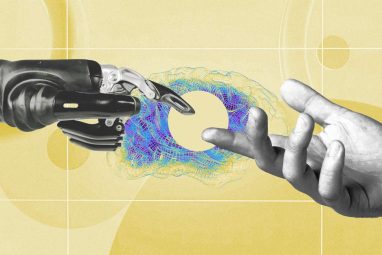
[Image source: Chetan Jha/MITSMR India]
Fewer than one in four of India’s early-career technology workers qualifies as AI-native, despite widespread use of artificial intelligence tools, according to a new Nasscom study.
Nearly seven in 10 of those assessed were classified as AI-proficient, while nine in 10 fell into either the AI-proficient or AI-native categories, the technology industry body said on Monday.
The index ranks talent across four stages of AI readiness, from basic awareness to the ability to direct, verify and work independently with the technology.
The findings point to a gap between using AI effectively and having the technical depth, judgment and problem-solving ability to work independently of it.
“AI skills penetration is not the same as being AI-native,” Nasscom Senior Vice President and Chief Strategy Officer Sangeeta Gupta said. “Without a rigorous measurement framework such as the AI-Native Talent Index followed by action, India risks scaling a workforce that is AI-reliant rather than AI-native.”
The first edition of Nasscom’s AI-Native Talent Index assessed final-year students in computer science and related engineering courses, along with technology professionals with up to three years of experience.
It evaluated participants across 11 areas, including AI fluency, reliance, orchestration, judgment, cognitive independence, technical grounding, learning, foundational capability, productivity and responsible use.
Participants were grouped into four categories: AI-native, AI-proficient, AI-enabled and AI-aware.
Nasscom said AI tools were improving productivity and helping young workers learn faster. Greater dependence on them, however, could reduce opportunities to build skills through coding, debugging and hands-on problem-solving.
The study urged universities to move beyond coding instruction and place greater emphasis on engineering fundamentals, domain knowledge, verification, and independent judgment.
Companies should also rethink how they hire, onboard and train early-career workers, it said.
Recruitment assessments should test whether candidates can define problems, direct AI tools, verify their output and make sound technical decisions, rather than merely produce code.
Nasscom recommended simulation-based learning, structured exercises, stronger mentorship and AI-supported foundational training.
Companies should also ensure that automating routine work does not weaken the development of deep engineering expertise, it said.
Organizations would need clearer governance policies, stronger verification processes and team structures designed for employees working alongside AI systems.
The findings come as Indian technology companies and global capability centers increasingly automate entry-level tasks while seeking workers with stronger technical, analytical and domain skills.
Nasscom represents more than 3,500 companies across India’s technology industry, including IT services firms, multinational companies, product businesses, global capability centers and deep-technology startups.