

UST, Kaynes to Build $375 Million OSAT Plant in Gujarat
The venture pairs UST’s global semiconductor clients with Kaynes’ local manufacturing, targeting advanced packaging and reliability testing for domestic and export markets.
News
- Karnataka Plans State-Backed AI University
- Kudankulam Data Leak Exposes Critical Infrastructure Gaps
- IBM Says It Faltered as AI Spending Upends Enterprise Buying
- TCS to Power JFK Airport’s $9.5 Billion New Terminal
- AI Use Rises but Engineering Depth Lags, Nasscom Study Shows
- AI Agents Expose Insurance Blind Spots, Report Says
[Image source: Pankaj Kirdatt/MITSMR India]
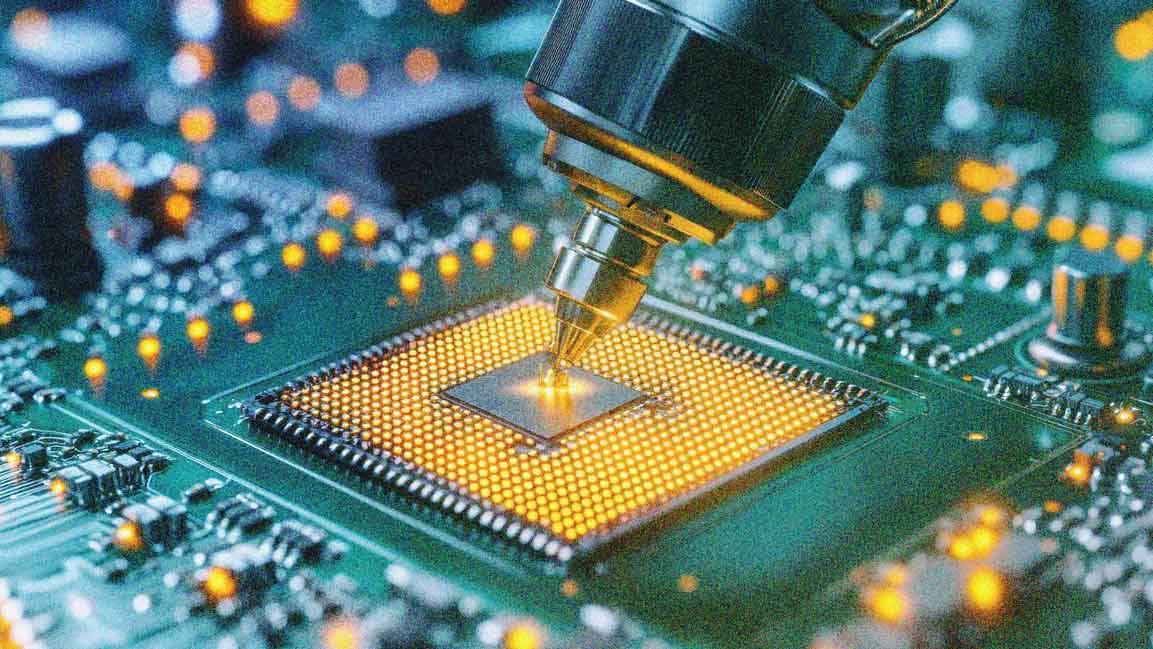
California-based tech firm UST has tied up with domestic chipmaker Kaynes Semicon to build a Rs3,330 crore (about $375 million) outsourced semiconductor assembly and test (OSAT) facility in Sanand, Gujarat, aiming to serve both global and local clients as India pushes deeper into chip packaging and final testing.
Kaynes Semicon, the wholly owned semiconductor unit of listed Kaynes Technology India, will issue 27,778 compulsorily convertible preference shares to UST, equal to 10% on conversion, under a packaging collaboration disclosed in an exchange filing.
UST brings a worldwide semiconductor client base and strengths in R&D and testing, while Kaynes contributes local manufacturing experience in an OSAT segment that is still nascent in India.
“This partnership will help shape the future of semiconductor manufacturing in India,” said UST Chief Executive Krishna Sudheendra.
“Our partnership with UST enables Kaynes Semicon to deliver advanced OSAT solutions while strengthening India’s self-reliant semiconductor ecosystem,” said Kaynes Semicon Chief Executive Raghu Panicker.
Sanand plugs the venture into Gujarat’s emerging cluster, where Micron Technology, the US memory-chip maker, is commissioning an assembly and test plant and Tata group is developing a wafer fab in nearby Dholera in partnership with Taiwan’s Powerchip Semiconductor Manufacturing Co.
New projects are being helped by India’s incentive regime for semiconductors and by state efforts to add housing and vendor infrastructure around the Dholera and Sanand hubs.
The UST agreement follows a separate Kaynes Semicon venture with Switzerland-based SEALSQ to establish a secure semiconductor center in India focused on on-shore personalization and quantum-resistant technology.